The logistics industry is evolving rapidly. Customer expectations are rising, delivery timelines are shrinking, and competition is stronger than ever. Yet many logistics and transportation companies still rely on manual processes to manage daily operations.

Spreadsheets, phone calls, WhatsApp updates, and disconnected tools might work when your business is small — but as your fleet grows, manual workflows start slowing everything down.

If your operations feel chaotic, it may be time to adopt logistics automation.

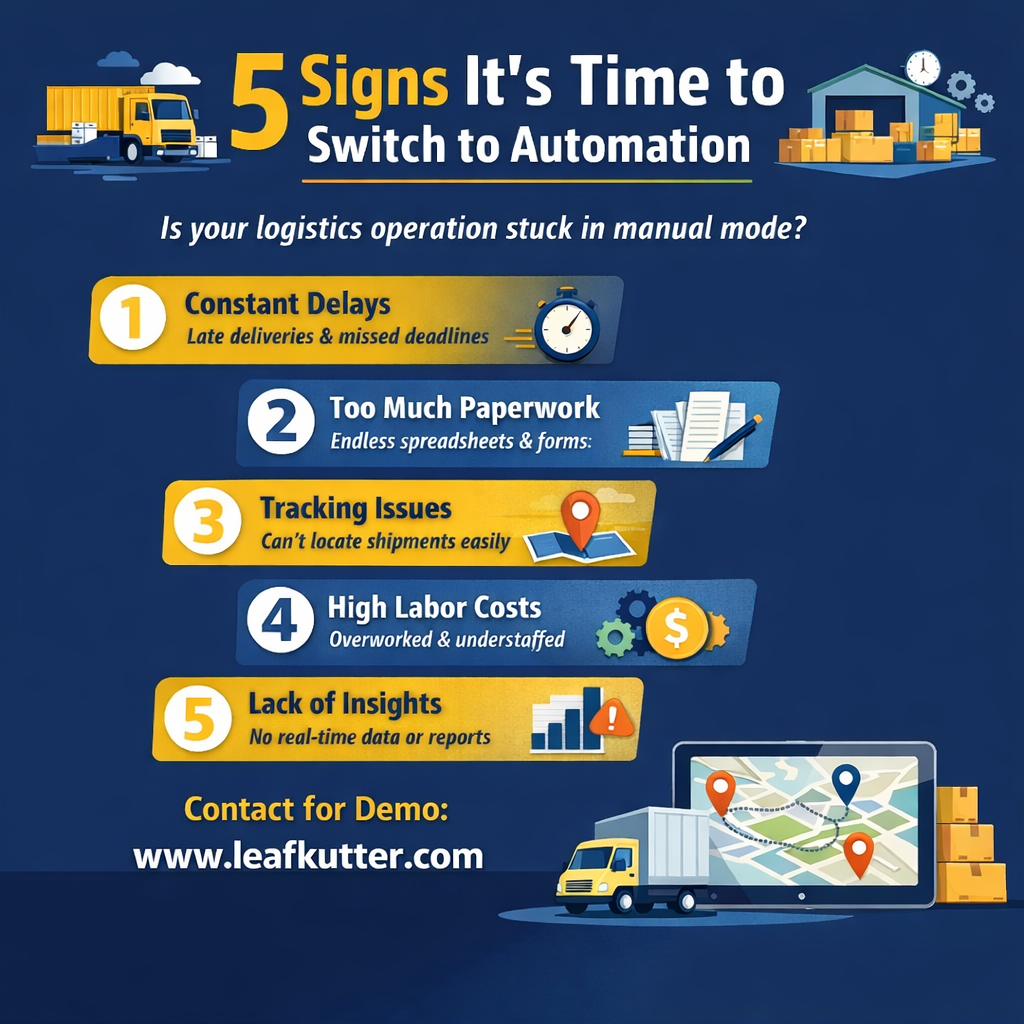
Here are five clear signs your logistics company is ready for the switch.


1️⃣ Your Team Relies on Spreadsheets for Daily Operations

Spreadsheets are useful tools — but they were never designed to run a logistics operation.

When dispatch, shipment tracking, driver management, and reporting are handled in spreadsheets, problems quickly appear:

• Data becomes outdated

• Errors increase

• Collaboration becomes difficult

• Teams waste hours on manual updates

As operations scale, spreadsheets become a bottleneck instead of a solution.

Automation replaces manual data entry with real-time, centralized information.


2️⃣ You Don’t Have Real-Time Visibility of Your Fleet

One of the biggest challenges logistics companies face is lack of visibility.

Without real-time tracking:

• Customers keep calling for updates

• Dispatch teams chase drivers for information

• Delays are discovered too late

• Service quality drops

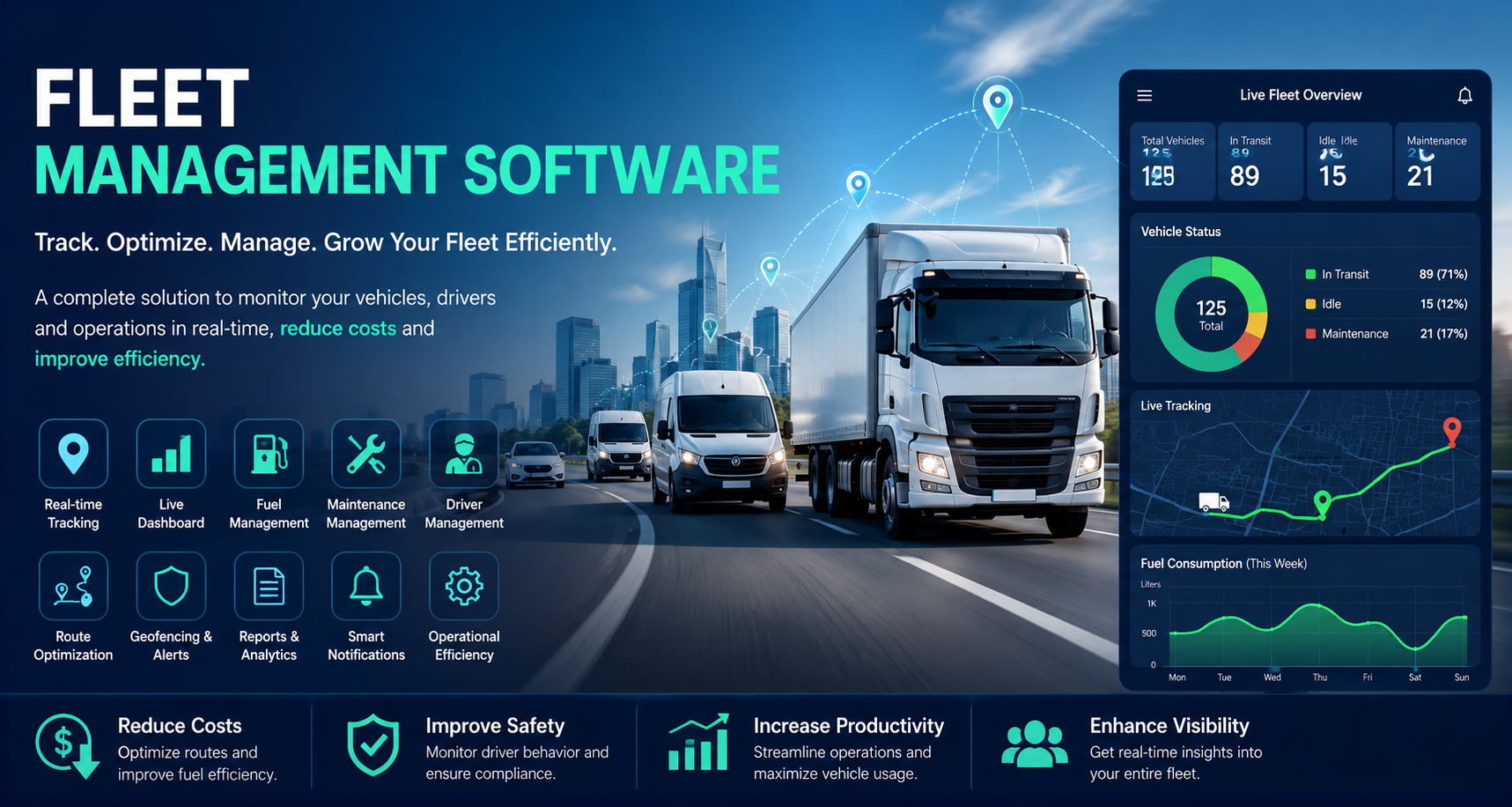
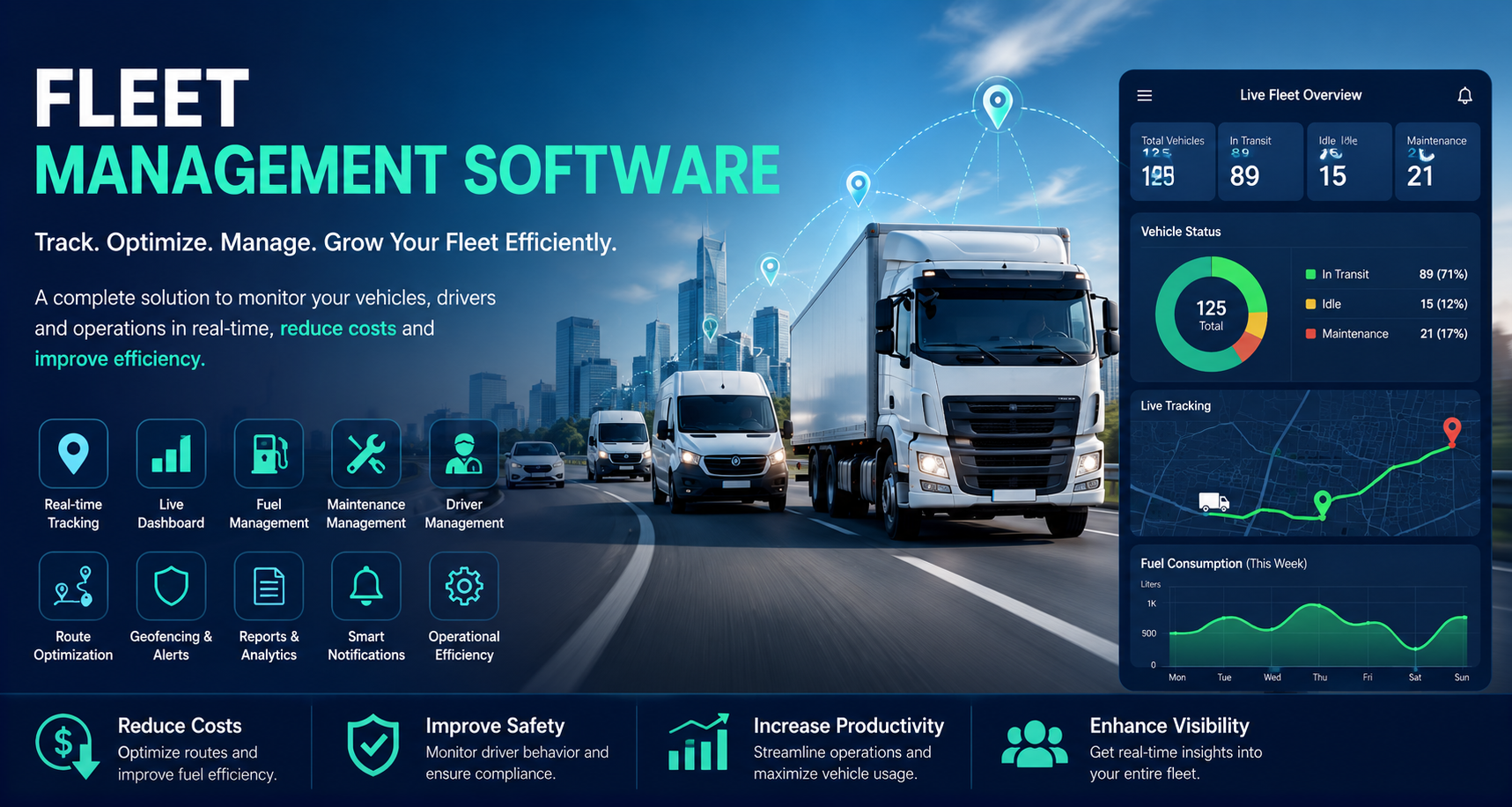
Modern logistics requires live fleet and shipment visibility.

Automation allows you to track operations in real time and make faster decisions.

3️⃣ Dispatching Takes Too Much Time

Manual dispatching often involves:

• Phone calls

• Message coordination

• Manual route planning

• Constant follow-ups

This slows down operations and increases human error.

With automation, dispatch becomes:

• Faster

• More accurate

• More efficient

Smart systems can assign jobs, optimize routes, and reduce planning time dramatically.


4️⃣ Your Labor Costs Keep Increasing

When operations grow, many companies hire more staff to manage the workload.

But scaling through hiring alone is expensive and unsustainable.

Automation helps logistics companies scale without increasing headcount by:

• Reducing repetitive tasks

• Eliminating manual coordination

• Streamlining workflows

This improves productivity while keeping operational costs under control.


5️⃣ You Lack Clear Insights and Reports

Manual operations make it difficult to answer key questions like:

• Which routes are most efficient?

• Where are delays happening?

• How can fuel costs be reduced?

• How productive is the fleet?

Automation provides dashboards and analytics that turn data into decisions.

Better insights lead to better planning, better performance, and better profits.


Why Logistics Automation Is No Longer Optional

The logistics industry is becoming more digital every year. Companies that adopt automation gain:

• Faster operations

• Better customer satisfaction

• Lower operational costs

• Competitive advantage

• Scalable growth

Companies that delay automation risk falling behind.


How Leafkutter Helps Logistics Companies Modernize

Leafkutter is an all-in-one logistics platform designed to simplify and automate daily operations.

With Leafkutter, you can:

• Automate dispatch and routing

• Track fleets and shipments in real time

• Manage drivers and workforce

• Centralize logistics operations

• Access powerful analytics and reports

Our goal is simple: help logistics companies move from manual chaos to automated efficiency.


Ready to Modernize Your Logistics Operations?

If your company is experiencing any of these signs, now is the time to explore automation.

👉 Book a free demo today:

www.leafkutter.com

Start building a smarter, more scalable logistics operation.