Best Logistics Software for Transportation Companies in 2026
The logistics and transportation industry is undergoing rapid digital transformation. As customer expectations continue to rise and supply chains become increasingly complex, businesses must adopt modern logistics software to stay competitive.
Whether you operate a trucking company, freight forwarding business, shipping organization, or large-scale transportation network, selecting the best logistics software can significantly improve operational efficiency, reduce costs, and increase customer satisfaction.
This comprehensive guide explores the key features, benefits, and factors to consider when choosing the best logistics software for your transportation business.
What is Logistics Software?
Logistics software is a centralized digital platform designed to help transportation and logistics companies manage shipments, fleets, deliveries, warehouses, customer communication, and supply chain operations.
Instead of relying on spreadsheets, paperwork, and disconnected systems, logistics software brings all operations together in one integrated platform.
Businesses can monitor shipments in real time, optimize routes, track vehicles, automate workflows, and generate detailed reports that support better decision-making.
Why Transportation Companies Need Logistics Software
Transportation businesses face multiple daily challenges including:
- Rising fuel costs
- Driver shortages
- Delivery delays
- Poor route planning
- Customer complaints
- Manual paperwork
- Limited shipment visibility
Without the right technology, these issues can negatively impact profitability and customer satisfaction.
Modern logistics management software helps solve these challenges through automation, analytics, and real-time tracking.
Characteristics of the Best Logistics Software
Not all logistics platforms are created equal.
The best logistics software should offer a combination of operational control, automation, visibility, and scalability.
Real-Time Shipment Tracking
One of the most important features of logistics software is shipment tracking.
Businesses need complete visibility into:
- Shipment locations
- Delivery status
- Transit delays
- Estimated arrival times
Real-time tracking improves communication between logistics providers and customers.
Benefits include:
- Reduced customer inquiries
- Improved delivery accuracy
- Better customer satisfaction
- Faster issue resolution
Fleet Management Capabilities
Fleet management is a critical component of transportation operations.
The best logistics software should provide:
Vehicle Monitoring
Track all vehicles in real time.
Maintenance Scheduling
Prevent breakdowns through proactive maintenance.
Driver Management
Monitor driver performance and compliance.
Fuel Tracking
Identify fuel consumption patterns and opportunities for cost savings.
Fleet optimization can significantly reduce transportation expenses.
Route Optimization
Fuel costs represent a major operational expense for logistics companies.
Advanced route optimization helps businesses:
- Reduce mileage
- Avoid traffic congestion
- Improve delivery schedules
- Increase daily deliveries
Benefits include:
- Lower fuel consumption
- Faster deliveries
- Reduced vehicle wear
- Improved productivity
Customer Portal Access
Modern customers expect self-service capabilities.
A customer portal allows clients to:
- Track shipments
- Download invoices
- Access delivery documents
- View order history
- Receive notifications
This enhances transparency and customer satisfaction.
Automated Notifications
Communication is essential in logistics.
The best logistics software automatically sends:
- Shipment confirmations
- Pickup notifications
- Delivery updates
- Delay alerts
- Proof of delivery notifications
Automation improves customer experience while reducing administrative workload.
Warehouse Management Integration
Transportation companies often work closely with warehouses.
Integrated warehouse management features help businesses:
- Track inventory
- Monitor stock levels
- Process orders faster
- Reduce fulfillment errors
This improves overall supply chain efficiency.
Reporting and Business Intelligence
Successful logistics companies rely on data-driven decisions.
The best logistics software should offer comprehensive reporting tools.
Examples include:
Delivery Performance Reports
Measure on-time delivery rates.
Fleet Utilization Reports
Monitor vehicle usage.
Revenue Reports
Analyze profitability by customer or route.
Fuel Consumption Reports
Track fuel expenses and trends.
Driver Performance Reports
Evaluate efficiency and safety.
These insights support continuous improvement.
Major Benefits of Logistics Software
Increased Operational Efficiency
Manual logistics processes are time-consuming and prone to errors.
Automation helps streamline:
- Shipment processing
- Dispatch operations
- Document management
- Customer communication
This increases overall productivity.
Cost Reduction
The best logistics software helps reduce:
- Fuel costs
- Administrative expenses
- Labor costs
- Vehicle maintenance expenses
Improved efficiency directly impacts profitability.
Enhanced Customer Experience
Today's customers expect complete transparency.
Logistics software provides:
- Real-time tracking
- Automated updates
- Faster issue resolution
- Better communication
This helps build trust and long-term customer relationships.
Better Visibility Across Operations
Managers gain real-time access to:
- Shipment status
- Vehicle locations
- Driver activity
- Warehouse operations
This improves decision-making and responsiveness.
Improved Scalability
As businesses grow, logistics operations become more complex.
Scalable logistics software allows companies to:
- Add more users
- Manage additional vehicles
- Expand delivery networks
- Support larger customer bases
Without disrupting operations.
Industries That Benefit from Logistics Software
Trucking Companies
Trucking businesses use logistics software for:
- Fleet tracking
- Route planning
- Driver management
- Maintenance scheduling
Freight Forwarders
Freight forwarding companies benefit from:
- Shipment visibility
- Documentation management
- Multi-modal transportation tracking
Third-Party Logistics Providers (3PL)
3PL companies use logistics software to:
- Manage multiple clients
- Coordinate deliveries
- Improve reporting
Maritime Logistics Companies
Shipping and maritime businesses rely on:
- Vessel tracking
- Cargo management
- Crew scheduling
E-Commerce Companies
Online retailers use logistics software for:
- Order fulfillment
- Inventory management
- Delivery tracking
Common Mistakes When Choosing Logistics Software
Many businesses invest in software without evaluating their long-term requirements.
Avoid these common mistakes:
Choosing Based Only on Price
Cheap solutions often lack critical functionality.
Focus on long-term value rather than upfront cost.
Ignoring Scalability
Your logistics software should support future growth.
Limited Integration Capabilities
Ensure the platform integrates with:
- Accounting systems
- ERP software
- GPS devices
- Payment gateways
Poor User Experience
Complicated software reduces adoption rates.
Choose intuitive and user-friendly solutions.
Weak Reporting Features
Analytics are essential for improving logistics operations.
Cloud-Based Logistics Software vs On-Premise Systems
Cloud-Based Logistics Software
Advantages:
- Lower infrastructure costs
- Anywhere access
- Automatic updates
- Better scalability
On-Premise Software
Challenges:
- High setup costs
- Maintenance requirements
- Limited accessibility
Most modern transportation businesses prefer cloud-based logistics platforms.
Emerging Trends in Logistics Software
Artificial Intelligence (AI)
AI helps businesses:
- Predict delays
- Optimize routes
- Forecast demand
- Improve customer service
Internet of Things (IoT)
Connected devices provide:
- Vehicle diagnostics
- Cargo monitoring
- Equipment tracking
Predictive Analytics
Businesses can identify risks before they impact operations.
Mobile Logistics Applications
Drivers and field staff can access critical information from anywhere.
Why Leafkutter is Among the Best Logistics Software Solutions
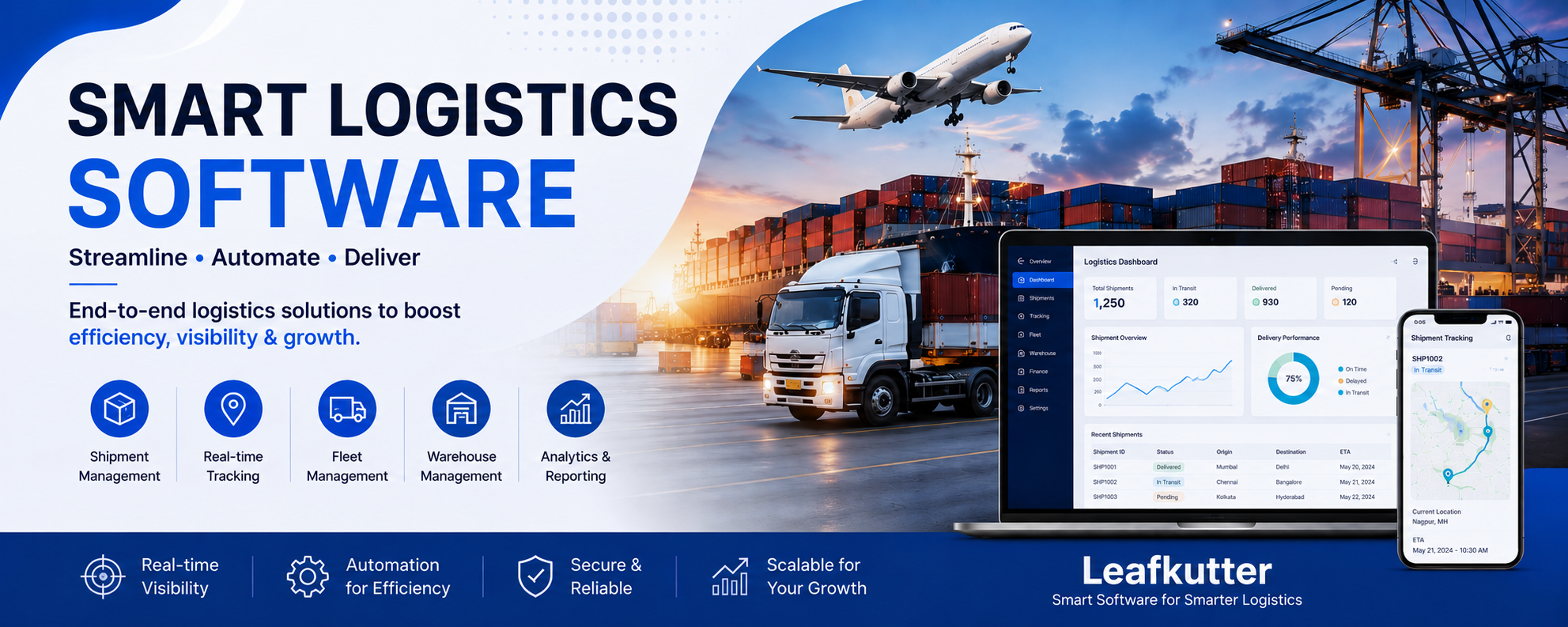
Leafkutter is designed specifically for modern logistics and transportation businesses.
The platform helps organizations automate operations, improve visibility, and scale efficiently.
Core Features
- Shipment Management
- Fleet Management
- Warehouse Management
- Transportation Management
- Vessel Management
- Delivery Tracking
- Customer Portal
- Route Optimization
- Reporting & Analytics
- Supply Chain Visibility
Key Benefits
- Reduced operational costs
- Improved delivery performance
- Real-time shipment visibility
- Better customer experience
- Scalable cloud infrastructure
Whether you operate a trucking company, shipping business, freight forwarding organization, or logistics enterprise, Leafkutter provides the tools needed to optimize operations and drive growth.
Frequently Asked Questions
What is the best logistics software?
The best logistics software depends on your business requirements. Key features should include shipment tracking, fleet management, route optimization, customer portals, and reporting tools.
Can logistics software improve delivery performance?
Yes. Route optimization, real-time tracking, and automation significantly improve delivery efficiency.
Is logistics software suitable for small transportation businesses?
Absolutely. Cloud-based logistics platforms are scalable and suitable for businesses of all sizes.
How much does logistics software cost?
Pricing varies depending on features, users, and customization requirements.
What industries use logistics software?
Transportation companies, trucking businesses, freight forwarders, shipping companies, warehouses, and e-commerce businesses commonly use logistics software.
Conclusion
The logistics industry is becoming increasingly competitive, making technology a critical component of business success. The best logistics software helps transportation companies streamline operations, reduce costs, improve customer satisfaction, and gain complete visibility into their supply chain.
By investing in a scalable, feature-rich logistics platform, businesses can position themselves for long-term growth and operational excellence.
Ready to Modernize Your Logistics Operations?
Leafkutter delivers advanced logistics management software designed to help transportation companies automate workflows, improve visibility, and achieve sustainable growth.
Explore Leafkutter's logistics software solutions and discover how technology can transform your transportation business.


