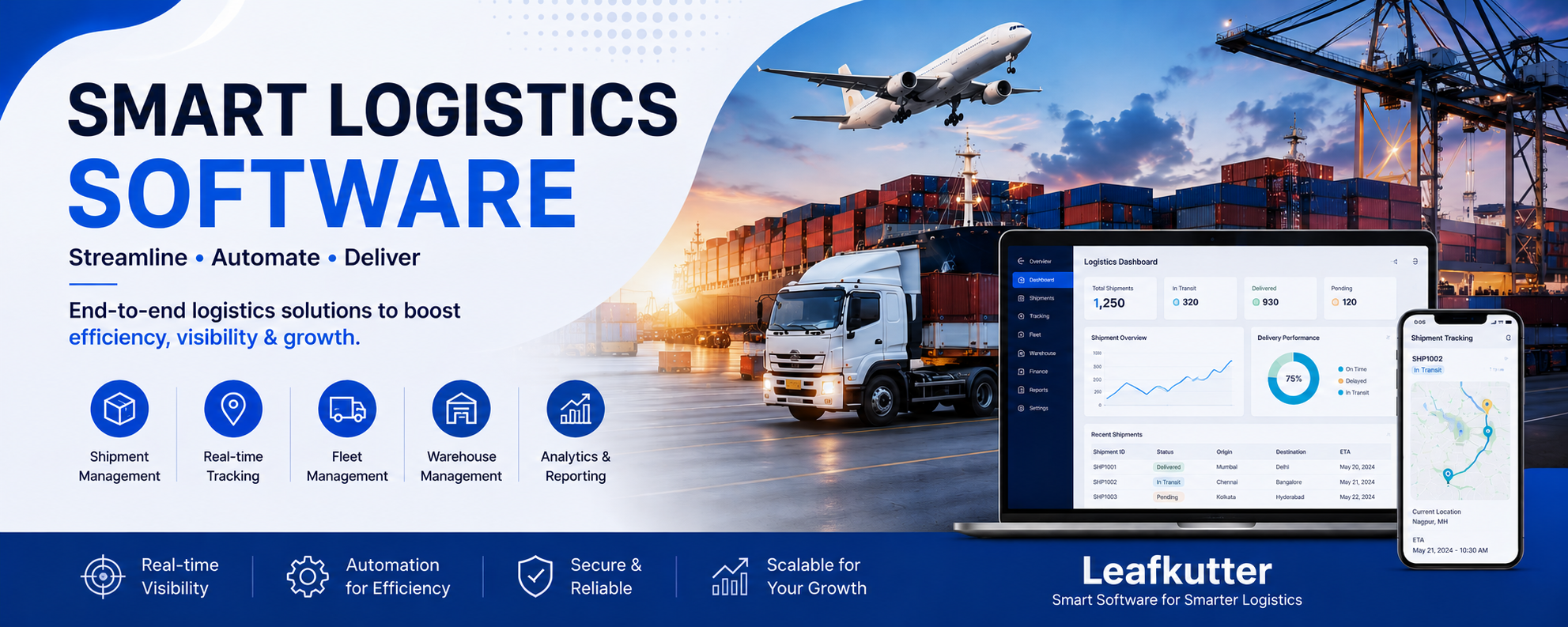
Custom Logistics Software Development: Why Logistics Companies Need Tailored Solutions in 2026
The logistics industry is becoming increasingly competitive. Businesses must manage shipments, fleets, warehouses, customers, suppliers, and financial operations while maintaining speed, accuracy, and customer satisfaction.
Many logistics companies initially adopt off-the-shelf software solutions. While these systems may provide basic functionality, they often fail to address unique operational requirements.
As businesses grow, they discover that generic software creates limitations rather than solving problems.
This is why many transportation companies, freight forwarders, warehousing businesses, shipping operators, and supply chain organizations are investing in Custom Logistics Software Development.
Custom logistics software is designed specifically around a company's workflows, operational requirements, customer expectations, and business goals.
This guide explains why custom logistics software has become a strategic investment for modern logistics companies and how it can drive operational excellence.
What is Custom Logistics Software?
Custom logistics software is a technology solution developed specifically for the unique needs of a logistics business.
Unlike ready-made software that serves multiple industries and business types, custom software is designed around your exact operational processes.
A custom logistics solution may include:
- Shipment Management
- Fleet Management
- Route Optimization
- Warehouse Management
- Customer Portal
- Driver Management
- Freight Management
- Billing & Invoicing
- Reporting & Analytics
- ERP Integration
Every feature is tailored to support your business operations.
Why Generic Logistics Software Often Falls Short
Many logistics companies initially choose pre-built software because of lower upfront costs.
However, over time, several limitations emerge.
Unnecessary Features
Most off-the-shelf software includes features your business may never use.
Businesses often pay for functionality that adds little value.
This increases software costs while creating operational complexity.
Limited Customization
Every logistics company operates differently.
Generic software forces businesses to adapt their processes to the software rather than the software adapting to the business.
This creates inefficiencies.
Integration Challenges
Many logistics companies use:
- ERP Systems
- Accounting Software
- GPS Tracking Systems
- CRM Platforms
- Customer Portals
Off-the-shelf software often struggles to integrate seamlessly with existing systems.
Scalability Issues
As companies grow:
- More users are added
- More vehicles are managed
- More shipments are processed
Generic software often becomes restrictive.
Custom solutions can scale alongside business growth.
Benefits of Custom Logistics Software Development
Designed Around Your Workflow
Every logistics company has unique operational processes.
Custom software is built around:
- Existing workflows
- Business requirements
- Operational objectives
This eliminates unnecessary steps and improves efficiency.
Improved Operational Efficiency
Custom software automates repetitive tasks such as:
- Shipment Creation
- Dispatch Scheduling
- Route Planning
- Invoice Generation
- Customer Notifications
Automation reduces manual effort and increases productivity.
Better User Experience
Employees work more efficiently when software aligns with their daily tasks.
Custom interfaces provide:
- Simpler navigation
- Faster workflows
- Reduced training requirements
Enhanced Visibility
Custom dashboards provide real-time visibility into:
- Fleet Operations
- Shipment Status
- Warehouse Activities
- Customer Orders
- Revenue Metrics
Managers can monitor operations from a centralized platform.
Higher Return on Investment
Although custom software requires an initial investment, businesses often achieve higher long-term returns through:
- Reduced labor costs
- Increased efficiency
- Better resource utilization
- Improved customer retention
Key Modules of Custom Logistics Software
Transportation Management System (TMS)
A Transportation Management System helps manage:
- Dispatch Operations
- Route Planning
- Carrier Management
- Delivery Tracking
Benefits include:
- Reduced transportation costs
- Improved delivery performance
- Better fleet utilization
Fleet Management Software
Fleet management modules provide:
Vehicle Tracking
Monitor vehicle locations in real time.
Driver Management
Track driver performance.
Maintenance Scheduling
Reduce vehicle downtime.
Fuel Management
Control fuel expenses.
Shipment Management System
Shipment management helps businesses:
- Create shipments
- Monitor delivery status
- Track cargo movement
- Manage proof of delivery
This improves visibility and customer satisfaction.
Warehouse Management System
Warehouse modules include:
- Inventory Tracking
- Barcode Scanning
- Stock Management
- Order Fulfillment
Benefits:
- Improved inventory accuracy
- Faster order processing
- Reduced warehouse costs
Customer Portal
Modern customers expect transparency.
Customer portals allow clients to:
- Track shipments
- Download invoices
- View order history
- Access reports
This improves customer experience and reduces support requests.
Billing and Finance Management
Custom logistics software can automate:
- Invoicing
- Payment Tracking
- Expense Management
- Financial Reporting
This improves cash flow management.
Industries That Benefit from Custom Logistics Software
Freight Forwarding Companies
Manage:
- International Shipments
- Customs Documentation
- Multi-Modal Transportation
Trucking Companies
Optimize:
- Fleet Operations
- Driver Management
- Route Planning
Maritime Shipping Companies
Manage:
- Vessel Operations
- Cargo Tracking
- Crew Management
Warehousing Businesses
Improve:
- Inventory Control
- Warehouse Efficiency
- Order Fulfillment
Third-Party Logistics Providers (3PL)
Coordinate:
- Multiple Clients
- Warehouses
- Transportation Networks
Custom Logistics ERP Development
Many logistics companies require ERP functionality in addition to operational management.
Custom ERP solutions integrate:
- CRM
- Finance
- Fleet Management
- Warehouse Operations
- Shipment Tracking
- Procurement
This creates a unified business management platform.
Essential Features of Custom Logistics Software
Before developing custom software, businesses should prioritize:
Real-Time Tracking
Monitor vehicles and shipments instantly.
Route Optimization
Reduce transportation costs.
Mobile Applications
Support drivers and field staff.
API Integration
Connect external systems.
Automated Notifications
Improve customer communication.
Reporting & Analytics
Support data-driven decisions.
Cloud Accessibility
Enable access from anywhere.
Future Trends in Logistics Software Development
Artificial Intelligence
AI helps improve:
- Demand Forecasting
- Route Optimization
- Resource Planning
Internet of Things (IoT)
Connected devices provide:
- Vehicle Monitoring
- Cargo Tracking
- Equipment Diagnostics
Predictive Analytics
Businesses can identify risks before they impact operations.
Automation
Routine logistics processes are becoming increasingly automated.
Why Logistics Companies Choose Leafkutter for Custom Software Development
Leafkutter specializes in Custom Logistics Software Development tailored to the needs of modern logistics businesses.
Our solutions support:
- Transportation Companies
- Freight Forwarders
- Warehousing Businesses
- Maritime Operators
- Supply Chain Organizations
Solutions Include
- Logistics ERP Software
- Transportation Management Systems
- Fleet Management Software
- Warehouse Management Systems
- Shipment Tracking Platforms
- Customer Portals
- Supply Chain Management Software
Benefits
- Fully Customized Workflows
- Cloud-Based Infrastructure
- Scalable Architecture
- API Integration Support
- Real-Time Visibility
- Advanced Analytics
Leafkutter develops logistics solutions that align with your business processes and growth objectives.
Frequently Asked Questions
What is custom logistics software?
Custom logistics software is a tailored solution developed specifically for a logistics company's operational requirements.
Is custom software better than off-the-shelf software?
For businesses with unique workflows, custom software often provides better efficiency, flexibility, and long-term value.
How long does custom logistics software development take?
Development timelines vary depending on project complexity, modules, and integrations.
Can custom logistics software integrate with ERP systems?
Yes. Custom solutions can integrate with ERP, accounting, CRM, GPS, and third-party platforms.
Is custom logistics software scalable?
Yes. Custom platforms are designed to grow alongside your business.
Conclusion
The logistics industry continues to evolve rapidly, requiring businesses to adopt technology that supports efficiency, visibility, and growth.
While generic software may meet basic needs, custom logistics software provides the flexibility and scalability required to compete in today's market.
By investing in custom software development, logistics companies can streamline operations, improve customer experiences, reduce costs, and achieve long-term operational excellence.
Transform Your Logistics Operations with Leafkutter
Leafkutter develops custom logistics software solutions designed specifically for transportation companies, freight forwarders, warehouses, shipping operators, and supply chain businesses. Build a logistics platform tailored to your exact business requirements and future growth plans.


