Logistics ERP Software: The Complete Guide for Modern Logistics Businesses in 2026
The logistics industry has evolved significantly over the last decade. Transportation companies, freight forwarders, warehouse operators, shipping companies, and supply chain organizations are facing increasing pressure to improve efficiency, reduce operational costs, and provide exceptional customer experiences.
Managing logistics operations using spreadsheets, emails, and disconnected software systems often leads to delays, errors, miscommunication, and poor visibility across the organization.
This is where Logistics ERP Software becomes essential.
A Logistics ERP System integrates all logistics-related operations into a single centralized platform, helping businesses automate workflows, improve visibility, and streamline daily operations.
Whether you're managing shipments, vehicles, warehouses, customer orders, invoices, or supply chain activities, logistics ERP software provides complete operational control from one dashboard.
What is Logistics ERP Software?
Logistics ERP Software is an enterprise resource planning solution specifically designed for logistics, transportation, freight forwarding, warehousing, and supply chain businesses.
Unlike standalone logistics applications that focus on a single function, ERP software integrates multiple business processes into one platform.
This includes:
- Transportation Management
- Fleet Management
- Warehouse Management
- Shipment Tracking
- Customer Relationship Management
- Billing & Finance
- Procurement
- Inventory Management
- Reporting & Analytics
The primary objective is to provide a single source of truth across the entire logistics operation.
Why Logistics Companies Need ERP Software
As logistics businesses grow, operations become increasingly complex.
Common challenges include:
Disconnected Systems
Different departments often use separate software tools.
This creates:
- Data duplication
- Communication gaps
- Reporting inconsistencies
Manual Processes
Many logistics companies still rely on:
- Excel spreadsheets
- Phone calls
- Email communication
- Paper-based documentation
This reduces efficiency and increases the likelihood of errors.
Lack of Visibility
Without ERP software, managers struggle to monitor:
- Shipment status
- Fleet performance
- Inventory levels
- Customer orders
Operational Delays
Manual coordination often leads to:
- Delivery delays
- Billing errors
- Missed deadlines
Logistics ERP software addresses these challenges through automation and centralized management.
Core Modules of Logistics ERP Software
Transportation Management Module
Transportation management is the backbone of logistics operations.
Features include:
- Shipment Planning
- Route Optimization
- Dispatch Management
- Carrier Management
- Delivery Tracking
Benefits:
- Reduced transportation costs
- Faster deliveries
- Improved efficiency
Fleet Management Module
Fleet management helps businesses monitor vehicles and drivers.
Capabilities include:
Vehicle Tracking
Real-time GPS monitoring.
Maintenance Management
Scheduled maintenance reminders.
Driver Management
Track performance and compliance.
Fuel Monitoring
Analyze fuel consumption and costs.
Warehouse Management Module
Warehouses play a critical role in supply chain operations.
ERP software provides:
- Inventory Management
- Stock Tracking
- Barcode Scanning
- Order Fulfillment
- Warehouse Reporting
Benefits include improved inventory accuracy and reduced operational costs.
Shipment Management Module
Shipment management helps businesses monitor goods from origin to destination.
Functions include:
- Shipment Creation
- Shipment Tracking
- Delivery Confirmation
- Proof of Delivery
- Customer Notifications
Customer Relationship Management (CRM)
Managing customer relationships is essential for logistics companies.
CRM features include:
- Lead Management
- Customer Records
- Sales Tracking
- Communication History
- Customer Support
Billing & Financial Management
ERP software automates financial processes.
Capabilities include:
- Invoice Generation
- Payment Tracking
- Accounts Receivable
- Expense Management
- Financial Reporting
This improves cash flow visibility and financial accuracy.
Inventory Management
Inventory management helps businesses:
- Track stock levels
- Monitor inventory movement
- Reduce stockouts
- Improve inventory turnover
Major Benefits of Logistics ERP Software
Centralized Operations
ERP software consolidates all logistics activities into a single platform.
This eliminates the need for multiple disconnected systems.
Increased Productivity
Automation reduces manual workloads.
Employees spend less time on repetitive tasks and more time on strategic activities.
Better Decision Making
Real-time dashboards provide insights into:
- Revenue
- Costs
- Fleet utilization
- Shipment performance
Managers can make informed decisions quickly.
Improved Customer Service
Customers receive:
- Real-time updates
- Faster responses
- Accurate shipment information
This improves customer satisfaction and retention.
Cost Reduction
ERP software helps reduce:
- Fuel costs
- Administrative expenses
- Operational inefficiencies
- Inventory carrying costs
How Logistics ERP Improves Supply Chain Visibility
Supply chain visibility is a major concern for modern businesses.
ERP software provides visibility across:
Suppliers
Monitor procurement activities.
Warehouses
Track inventory in real time.
Transportation
Monitor vehicle movements.
Customers
Manage deliveries and customer communication.
This improves coordination throughout the supply chain.
Logistics ERP vs Traditional Logistics Software
FeatureTraditional SoftwareLogistics ERP SoftwareShipment TrackingYesYesFleet ManagementLimitedYesWarehouse ManagementSeparate SystemIntegratedFinance ManagementSeparate SystemIntegratedCRMLimitedIntegratedAnalyticsBasicAdvancedScalabilityModerateHigh
ERP solutions provide significantly more value because they unify operations.
Industries That Benefit from Logistics ERP Software
Transportation Companies
Manage vehicles, drivers, routes, and deliveries.
Freight Forwarders
Coordinate multi-modal shipments efficiently.
Warehousing Businesses
Improve inventory control and order fulfillment.
Maritime Shipping Companies
Manage vessels, cargo, crew, and maintenance operations.
Third-Party Logistics Providers (3PL)
Handle multiple clients through centralized operations.
Key Features to Look for in Logistics ERP Software
Before investing in ERP software, ensure it includes:
Real-Time Tracking
Track shipments and vehicles instantly.
Cloud Accessibility
Access data from anywhere.
Mobile Applications
Enable field teams to stay connected.
Automation
Reduce manual work.
Custom Reporting
Generate detailed business insights.
API Integration
Connect with external systems.
Scalability
Support future business growth.
Future Trends in Logistics ERP Software
Artificial Intelligence
AI improves:
- Route planning
- Demand forecasting
- Resource allocation
IoT Integration
Connected devices monitor:
- Vehicle health
- Cargo conditions
- Equipment performance
Predictive Analytics
Businesses can identify operational risks before they occur.
Advanced Automation
Routine processes become increasingly automated.
Why Logistics Companies Choose Leafkutter ERP Software
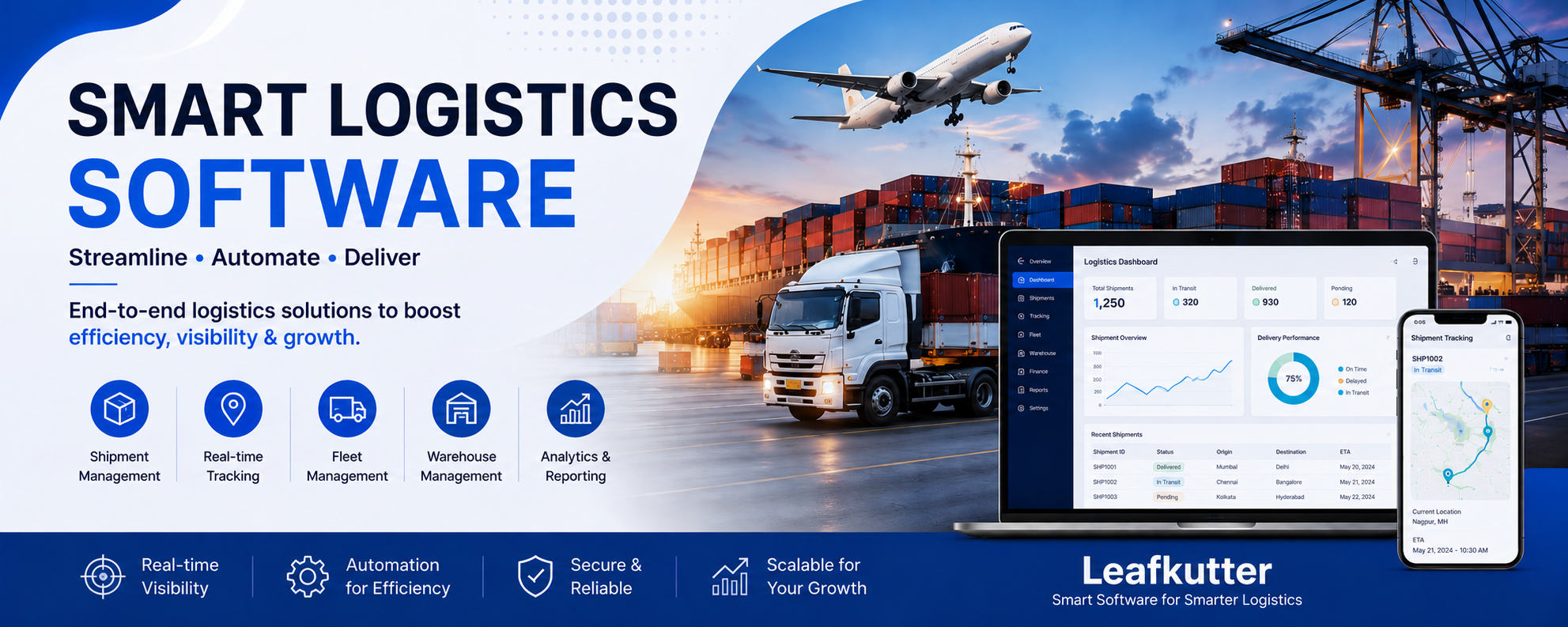
Leafkutter provides a modern cloud-based Logistics ERP Software platform designed specifically for logistics, transportation, warehousing, shipping, and supply chain businesses.
Key Modules
- Transportation Management
- Fleet Management
- Shipment Management
- Warehouse Management
- Customer Management
- Billing & Finance
- Supply Chain Visibility
- Reporting & Analytics
Benefits
- Centralized Operations
- Improved Efficiency
- Real-Time Visibility
- Reduced Costs
- Better Customer Service
- Scalable Infrastructure
Leafkutter helps logistics companies streamline operations while improving profitability and customer satisfaction.
Frequently Asked Questions
What is Logistics ERP Software?
Logistics ERP Software is an integrated platform that manages transportation, warehousing, fleet operations, shipments, customer relationships, and financial processes from a single system.
How is ERP different from logistics software?
ERP software integrates multiple business functions, whereas traditional logistics software typically focuses on specific operations.
Is Logistics ERP suitable for small businesses?
Yes. Modern cloud ERP platforms are scalable and support businesses of all sizes.
What industries use Logistics ERP Software?
Transportation companies, freight forwarders, warehouses, shipping companies, and supply chain organizations use logistics ERP systems.
Can ERP software reduce operational costs?
Yes. ERP software improves efficiency, reduces manual work, optimizes resources, and lowers operational expenses.
Conclusion
As logistics operations become more complex, businesses require integrated solutions that provide visibility, automation, and control across the entire supply chain.
Logistics ERP Software enables organizations to manage transportation, fleet operations, warehouses, shipments, customers, and finances through a centralized platform.
Companies that invest in modern ERP technology gain a significant competitive advantage through improved efficiency, better decision-making, reduced costs, and enhanced customer experiences.
For logistics businesses seeking long-term growth and operational excellence, implementing a powerful Logistics ERP solution is one of the smartest investments they can make.
Explore Leafkutter Logistics ERP Software
Transform your logistics operations with a modern cloud-based ERP platform built specifically for transportation, warehousing, shipping, and supply chain management. Leafkutter helps businesses achieve complete visibility, automation, and operational control from a single platform.


