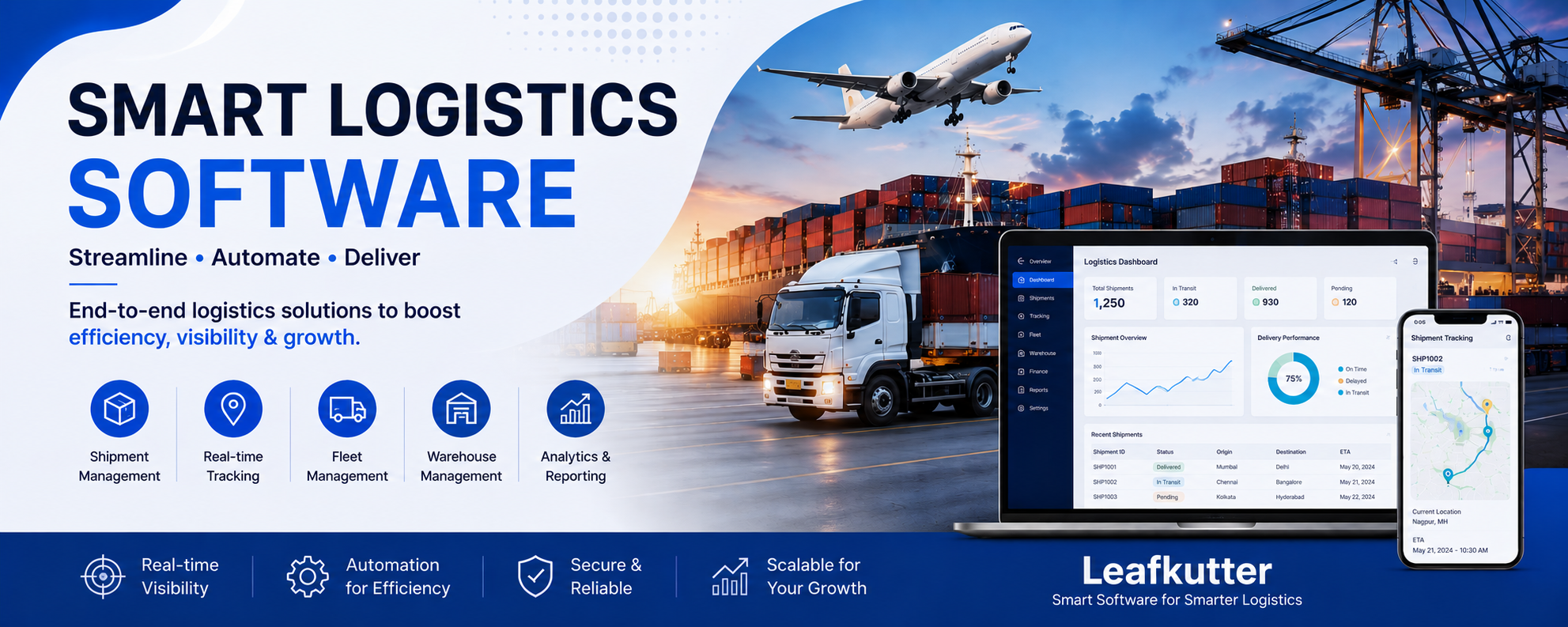
Logistics Software: The Complete Guide to Modern Logistics Management in 2026
In today's fast-paced business environment, logistics plays a critical role in ensuring products move efficiently from suppliers to customers. Whether you're managing a transportation company, freight forwarding business, warehouse operation, shipping company, or supply chain network, having the right logistics software can significantly improve efficiency, reduce operational costs, and increase customer satisfaction.
Modern logistics operations are no longer managed through spreadsheets, paperwork, and disconnected systems. Businesses are increasingly adopting logistics management software to automate workflows, improve visibility, and optimize every stage of the supply chain.
This comprehensive guide explores everything you need to know about logistics software, its benefits, features, use cases, and how businesses can leverage technology to stay competitive in 2026 and beyond.
What is Logistics Software?
Logistics software is a digital solution designed to manage, automate, and optimize logistics and supply chain operations. It enables businesses to monitor shipments, track vehicles, manage warehouses, handle customer orders, coordinate deliveries, and generate detailed operational reports from a centralized platform.
The primary goal of logistics software is to improve efficiency, reduce manual intervention, and provide real-time visibility into logistics activities.
Companies involved in transportation, warehousing, shipping, freight forwarding, maritime logistics, and supply chain management use logistics software to streamline their operations.
Why Logistics Software is Essential in 2026
Customer expectations have changed dramatically. Today's customers expect:
- Real-time shipment updates
- Faster deliveries
- Accurate order tracking
- Transparent communication
- Efficient customer support
Without modern logistics software, businesses often struggle with:
- Delivery delays
- Lost shipments
- Manual data entry errors
- Lack of visibility
- Poor customer experiences
- High operational costs
Modern logistics software addresses these challenges through automation, tracking, analytics, and intelligent decision-making tools.
Core Features of Logistics Software
Shipment Management
Shipment management enables businesses to create, monitor, and track shipments throughout the transportation lifecycle.
Key benefits include:
- Shipment creation
- Delivery scheduling
- Status tracking
- Delivery confirmation
- Customer notifications
Fleet Management
Fleet management helps logistics companies monitor their vehicles and drivers.
Features include:
- GPS tracking
- Vehicle maintenance scheduling
- Fuel monitoring
- Driver management
- Route optimization
Effective fleet management reduces costs and improves operational efficiency.
Warehouse Management
Warehouses are essential components of logistics operations.
Warehouse management software provides:
- Inventory tracking
- Stock management
- Barcode scanning
- Order fulfillment
- Warehouse analytics
This improves inventory accuracy and reduces fulfillment errors.
Route Optimization
Route optimization helps businesses identify the most efficient routes for deliveries.
Benefits include:
- Reduced fuel consumption
- Faster deliveries
- Lower transportation costs
- Improved driver productivity
Real-Time Tracking
Customers increasingly expect shipment visibility.
Real-time tracking provides:
- GPS-based location updates
- Shipment status updates
- Estimated arrival times
- Delivery notifications
This improves customer confidence and satisfaction.
Customer Portal
A customer portal allows clients to:
- Track shipments
- Download documents
- View invoices
- Access reports
- Communicate with support teams
Self-service portals reduce customer service workloads.
Reporting and Analytics
Modern logistics software provides valuable insights into operations.
Common reports include:
- Delivery performance
- Fleet utilization
- Revenue analysis
- Fuel consumption
- Driver performance
These insights help management make informed decisions.
Benefits of Logistics Software
Improved Operational Efficiency
Automation reduces manual tasks and improves productivity.
Employees spend less time on repetitive work and more time on strategic activities.
Reduced Costs
Logistics software helps businesses reduce:
- Fuel costs
- Labor costs
- Administrative expenses
- Maintenance expenses
Operational savings can significantly improve profitability.
Better Customer Service
Customers appreciate:
- Real-time updates
- Faster response times
- Accurate information
- Reliable deliveries
This improves customer retention and brand reputation.
Increased Visibility
Managers gain complete visibility into:
- Vehicle locations
- Shipment statuses
- Inventory levels
- Warehouse activities
This helps identify issues before they become major problems.
Improved Compliance
Many industries require strict compliance with regulations.
Logistics software helps businesses maintain:
- Documentation records
- Safety standards
- Regulatory compliance
- Audit trails
Industries That Use Logistics Software
Transportation Companies
Transportation businesses use logistics software to:
- Manage fleets
- Monitor drivers
- Track deliveries
- Improve routing
Freight Forwarding Companies
Freight forwarders benefit from:
- Shipment visibility
- Document management
- Customer communication
- Multi-modal transportation support
Warehousing Businesses
Warehouse operators use logistics software for:
- Inventory control
- Order fulfillment
- Stock movement tracking
- Warehouse optimization
Maritime Companies
Shipping companies use logistics software to manage:
- Vessels
- Cargo
- Crew operations
- Maintenance schedules
E-Commerce Businesses
Online retailers rely on logistics software for:
- Order management
- Delivery coordination
- Inventory management
- Customer notifications
Challenges Solved by Logistics Software
Manual Processes
Paper-based processes lead to errors and inefficiencies.
Automation eliminates repetitive tasks and improves accuracy.
Lack of Visibility
Businesses often struggle to monitor shipments and vehicles.
Real-time tracking provides complete operational visibility.
Rising Transportation Costs
Fuel expenses continue to increase globally.
Route optimization helps reduce unnecessary mileage.
Customer Expectations
Modern consumers demand faster and more transparent delivery experiences.
Logistics software helps meet these expectations.
Cloud-Based Logistics Software vs Traditional Systems
Traditional Systems
Traditional systems often involve:
- On-premise servers
- High maintenance costs
- Limited accessibility
- Complex upgrades
Cloud-Based Logistics Software
Cloud solutions provide:
- Anywhere access
- Lower infrastructure costs
- Automatic updates
- Improved security
- Better scalability
Most modern logistics companies prefer cloud-based solutions.
Emerging Trends in Logistics Software
Artificial Intelligence
AI is transforming logistics through:
- Predictive analytics
- Demand forecasting
- Route optimization
- Customer support automation
Internet of Things (IoT)
IoT devices help monitor:
- Vehicle conditions
- Cargo temperature
- Equipment performance
Automation
Automation reduces manual intervention in:
- Shipment processing
- Invoice generation
- Delivery scheduling
Big Data Analytics
Advanced analytics helps businesses:
- Identify trends
- Optimize operations
- Improve decision-making
How to Choose the Right Logistics Software
Before selecting logistics software, businesses should evaluate:
Scalability
Can the software grow with your business?
Customization
Can workflows be customized to your requirements?
Integration
Does it integrate with:
- ERP systems
- Accounting software
- GPS platforms
- Third-party APIs
Security
Ensure the platform offers:
- Data encryption
- Secure access controls
- Regular backups
Support
Reliable technical support is essential for smooth operations.
Why Businesses Choose Leafkutter Logistics Software
Leafkutter provides modern logistics software solutions designed for growing logistics and transportation companies.
Key capabilities include:
- Shipment Management
- Fleet Management
- Warehouse Management
- Transportation Management
- Vessel Management
- Delivery Tracking
- Supply Chain Visibility
- Customer Portals
- Reporting & Analytics
Whether you're managing a trucking company, freight forwarding operation, warehouse network, or maritime logistics business, Leafkutter helps streamline operations and improve profitability.
Frequently Asked Questions
What is logistics software?
Logistics software is a digital platform used to manage transportation, shipments, warehouses, inventory, and supply chain operations.
Who uses logistics software?
Transportation companies, freight forwarders, warehouse operators, shipping companies, and e-commerce businesses commonly use logistics software.
Can logistics software reduce costs?
Yes. Logistics software helps reduce fuel costs, labor expenses, operational inefficiencies, and administrative overhead.
Is logistics software suitable for small businesses?
Absolutely. Modern cloud-based logistics platforms are scalable and can support businesses of all sizes.
What features should I look for in logistics software?
Important features include shipment tracking, fleet management, route optimization, warehouse management, customer portals, and reporting tools.
Conclusion
The logistics industry continues to evolve rapidly, and businesses that adopt modern logistics software gain a significant competitive advantage. From shipment tracking and fleet management to warehouse optimization and analytics, logistics software enables organizations to improve efficiency, reduce costs, and deliver exceptional customer experiences.
As supply chains become increasingly complex, investing in a scalable and reliable logistics management platform is no longer optional—it's essential.
About Leafkutter
Leafkutter delivers powerful logistics management software solutions designed to help transportation, shipping, warehousing, and supply chain businesses achieve operational excellence. Explore our logistics software solutions and transform your logistics operations today.


