Maritime Management Software: Complete Guide for Shipping & Marine Operations in 2026
The global maritime industry is responsible for transporting the majority of the world's goods. From container shipping and bulk cargo transportation to offshore operations and marine logistics, maritime businesses play a critical role in global trade.
As shipping operations become increasingly complex, maritime companies face challenges such as fleet management, regulatory compliance, crew coordination, maintenance planning, cargo visibility, and operational efficiency.
Traditional systems and spreadsheets are no longer sufficient to manage modern maritime operations.
This is where Maritime Management Software becomes essential.
Maritime management software provides shipping companies with a centralized platform to manage vessels, cargo, crews, compliance requirements, maintenance activities, and business operations efficiently.
Organizations that implement modern maritime software gain improved visibility, lower operational costs, better compliance management, and enhanced fleet performance.
What is Maritime Management Software?
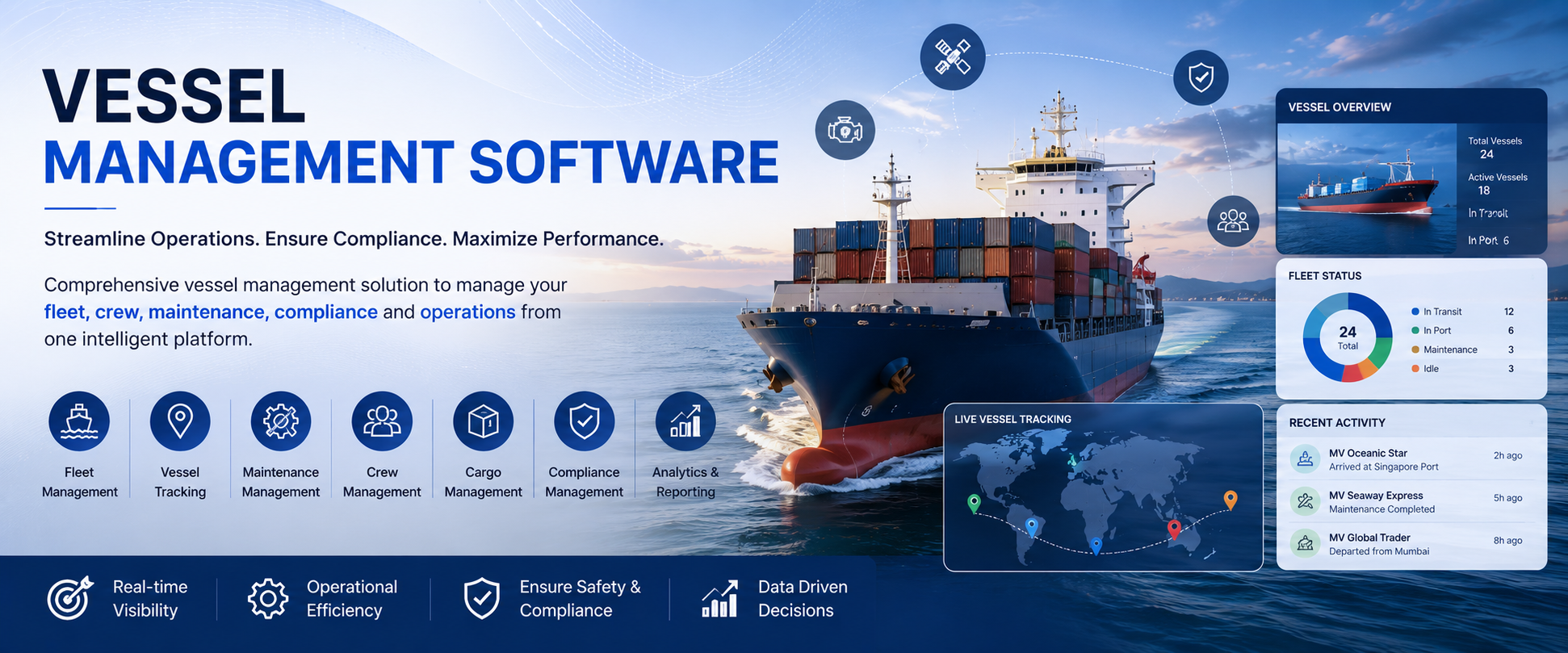
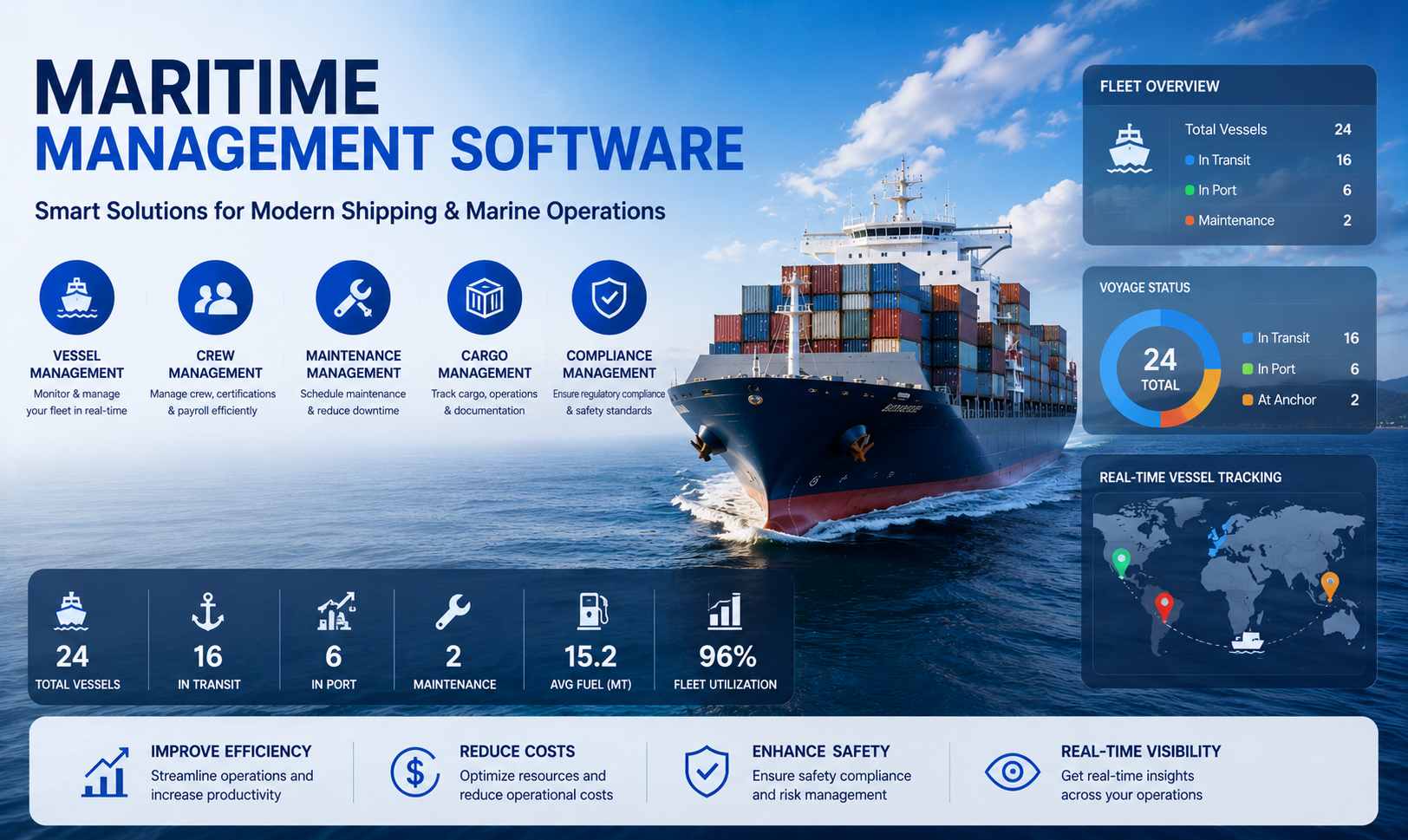
Maritime Management Software is a digital platform designed to help shipping companies, marine operators, logistics organizations, and offshore businesses manage maritime operations from a single system.
The software integrates multiple operational functions including:
- Vessel Management
- Fleet Management
- Crew Management
- Cargo Management
- Maintenance Management
- Compliance Management
- Voyage Planning
- Maritime Logistics
- Reporting & Analytics
The primary objective is to improve operational control and efficiency across maritime businesses.
Why Maritime Companies Need Maritime Management Software
Modern shipping organizations operate in a highly competitive environment.
Common challenges include:
Managing Multiple Vessels
Monitoring vessel activities across multiple locations can be difficult.
Regulatory Compliance
Shipping companies must comply with:
- IMO Regulations
- SOLAS Requirements
- MARPOL Standards
- ISM Code
Rising Operational Costs
Fuel, maintenance, and crew expenses continue to increase.
Cargo Visibility
Customers demand real-time shipment tracking.
Maintenance Complexity
Managing maintenance schedules manually increases risks.
Maritime software helps address these challenges through automation and real-time visibility.
Core Features of Maritime Management Software
Vessel Management
Vessel management modules help organizations monitor fleet operations.
Capabilities include:
- Vessel Tracking
- Fleet Monitoring
- Voyage Status Updates
- Performance Analysis
Benefits:
- Better fleet visibility
- Improved vessel utilization
Fleet Management
Fleet management provides centralized oversight of maritime assets.
Features include:
- Fleet Performance Monitoring
- Resource Allocation
- Operational Reporting
Benefits:
- Improved efficiency
- Reduced operating costs
Crew Management
Managing crew members efficiently is essential.
Functions include:
- Crew Scheduling
- Certification Tracking
- Payroll Management
- Contract Management
Benefits:
- Better workforce planning
- Regulatory compliance
Maintenance Management
Maintenance modules help organizations:
- Schedule preventive maintenance
- Track repairs
- Manage spare parts
- Monitor equipment health
Benefits:
- Reduced downtime
- Extended asset lifespan
Cargo Management
Cargo operations directly impact profitability.
Features include:
- Cargo Tracking
- Loading Management
- Unloading Operations
- Documentation Handling
Benefits:
- Better cargo visibility
- Reduced operational errors
Compliance Management
Maritime compliance software helps organizations meet regulatory requirements.
Capabilities include:
- Audit Management
- Safety Compliance
- Environmental Reporting
- Regulatory Documentation
Benefits:
- Reduced compliance risks
- Easier audits
Voyage Management
Voyage planning helps optimize shipping operations.
Features include:
- Route Planning
- Port Scheduling
- Weather Monitoring
- ETA Calculations
Benefits:
- Reduced transit times
- Improved operational planning
Maritime Analytics
Analytics tools provide insights into:
- Fleet Performance
- Fuel Consumption
- Operational Costs
- Vessel Utilization
These insights support data-driven decision-making.
Benefits of Maritime Management Software
Improved Operational Efficiency
Automation streamlines routine maritime activities.
Better Fleet Visibility
Managers gain real-time access to vessel locations and performance data.
Reduced Costs
The software helps reduce:
- Fuel Expenses
- Maintenance Costs
- Administrative Overhead
Enhanced Compliance
Automated compliance monitoring improves regulatory adherence.
Improved Customer Service
Customers receive better shipment visibility and communication.
Industries That Use Maritime Management Software
Container Shipping Companies
Manage global cargo transportation networks.
Bulk Cargo Operators
Monitor vessel operations efficiently.
Offshore Service Providers
Coordinate offshore logistics activities.
Marine Logistics Companies
Manage cargo movement and vessel scheduling.
Oil & Gas Marine Operators
Monitor specialized maritime assets.
Passenger Ferry Services
Coordinate schedules, crews, and vessel maintenance.
Challenges Solved by Maritime Software
Poor Vessel Visibility
Real-time tracking improves operational awareness.
Compliance Risks
Automated compliance tools reduce regulatory issues.
High Maintenance Costs
Preventive maintenance minimizes unexpected repairs.
Fuel Inefficiencies
Fuel monitoring improves consumption control.
Complex Crew Management
Centralized systems simplify workforce management.
Maritime Management Software vs Traditional Maritime Operations
FeatureTraditional ManagementMaritime SoftwareVessel TrackingLimitedReal-TimeCrew ManagementManualAutomatedMaintenance PlanningReactivePreventiveCompliance MonitoringManualAutomatedReportingTime ConsumingReal-TimeFleet VisibilityLimitedComplete
Future Trends in Maritime Management Software
Artificial Intelligence
AI helps optimize:
- Voyage Planning
- Fuel Consumption
- Maintenance Scheduling
Predictive Maintenance
Machine learning identifies equipment failures before they occur.
Internet of Things (IoT)
Connected devices monitor:
- Engine Performance
- Cargo Conditions
- Fuel Usage
Cloud Maritime Platforms
Cloud-based systems improve accessibility and scalability.
Maritime Automation
Automation reduces manual workloads across maritime operations.
Why Shipping Companies Choose Leafkutter Maritime Management Software
Leafkutter provides a modern maritime management platform designed for shipping companies, marine operators, and logistics organizations.
Core Features
- Vessel Management
- Fleet Management
- Crew Management
- Cargo Tracking
- Maintenance Scheduling
- Compliance Monitoring
- Voyage Planning
- Maritime Analytics
Benefits
- Real-Time Visibility
- Reduced Operational Costs
- Improved Compliance
- Better Asset Utilization
- Enhanced Customer Service
Leafkutter helps maritime organizations streamline operations while improving profitability and operational control.
Frequently Asked Questions
What is maritime management software?
Maritime management software helps shipping companies manage vessels, crews, maintenance, cargo, compliance, and maritime operations from a centralized platform.
Who uses maritime software?
Shipping companies, marine logistics providers, offshore operators, cargo carriers, and ferry services commonly use maritime software.
Can maritime software reduce costs?
Yes. It helps optimize fuel usage, maintenance planning, and operational efficiency.
Is maritime software suitable for small shipping companies?
Yes. Modern cloud-based platforms support fleets of all sizes.
What are the key features of maritime management software?
Important features include vessel tracking, crew management, maintenance planning, cargo management, compliance monitoring, and reporting.
Conclusion
Maritime Management Software has become a critical technology for modern shipping and marine operations. Organizations that implement advanced maritime platforms gain greater visibility, improved compliance, lower costs, and enhanced operational performance.
As the maritime industry continues to evolve, investing in maritime software is essential for long-term growth and competitiveness.
Explore Leafkutter Maritime Management Software
Leafkutter delivers intelligent maritime management solutions designed to help shipping companies optimize vessel operations, improve compliance, streamline logistics, and maximize fleet performance.