Vessel Management Software: Complete Guide for Maritime & Shipping Companies in 2026
The maritime industry is the backbone of global trade, transporting more than 80% of international goods worldwide. As shipping operations become increasingly complex, maritime companies face growing challenges in managing vessels, crew members, cargo, maintenance schedules, fuel consumption, and regulatory compliance.
Traditional spreadsheets and manual processes are no longer sufficient for modern maritime operations.
This is where Vessel Management Software becomes a critical business tool.
Modern vessel management systems help shipping companies streamline operations, improve fleet visibility, reduce costs, ensure compliance, and maximize vessel performance.
Whether you manage cargo vessels, tankers, offshore support vessels, fishing fleets, or passenger ships, implementing vessel management software can significantly improve operational efficiency and profitability.
What is Vessel Management Software?
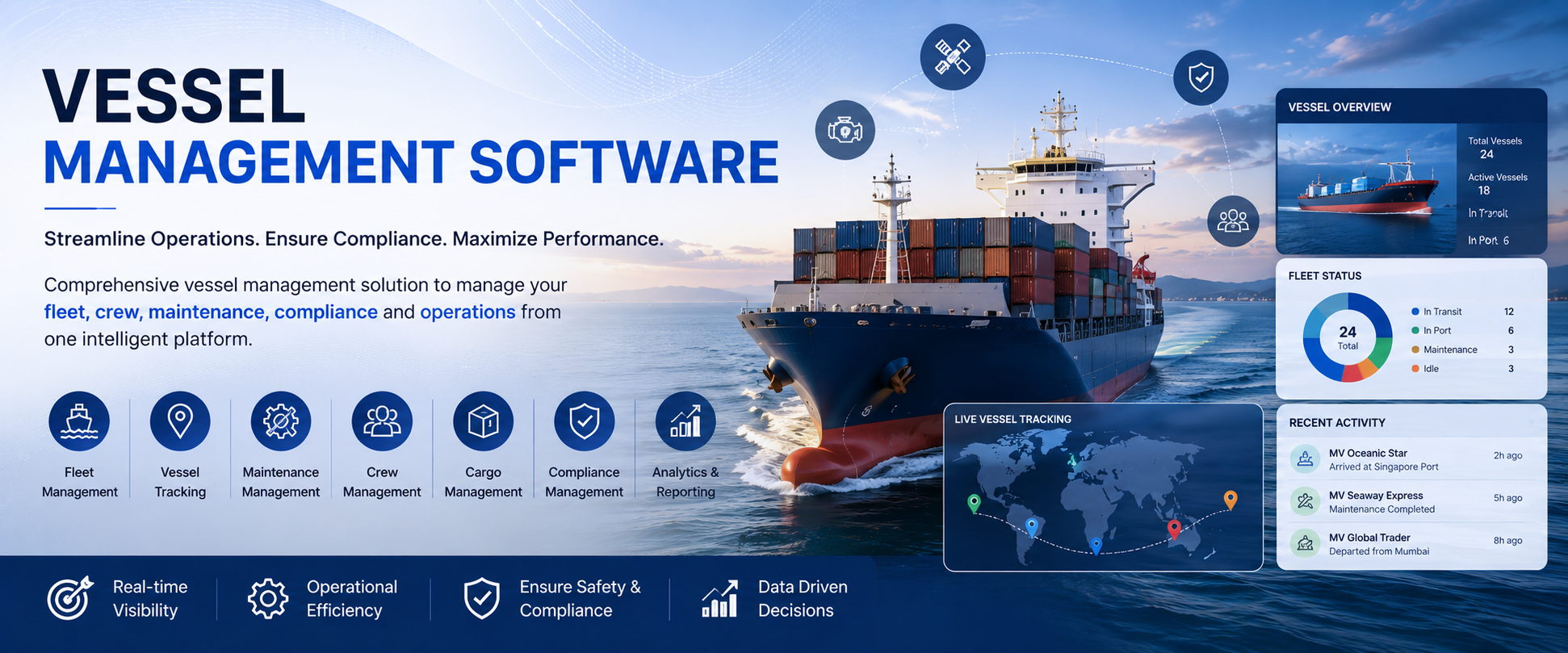
Vessel Management Software is a specialized maritime technology solution designed to help shipping companies manage and monitor vessel operations from a centralized platform.
The software provides tools for:
- Vessel Tracking
- Fleet Management
- Crew Management
- Maintenance Planning
- Cargo Operations
- Regulatory Compliance
- Fuel Monitoring
- Voyage Planning
- Financial Reporting
It enables shipping companies to gain complete visibility across their maritime operations.
Why Maritime Companies Need Vessel Management Software
The maritime industry faces numerous operational challenges.
Managing Multiple Vessels
As fleets grow, monitoring vessel performance becomes increasingly difficult.
Regulatory Compliance
Maritime organizations must comply with international regulations such as:
- IMO Regulations
- SOLAS Requirements
- MARPOL Standards
- ISM Code Compliance
Maintenance Scheduling
Unexpected equipment failures can lead to costly downtime.
Crew Management
Managing crew certifications, schedules, and performance requires dedicated systems.
Fuel Costs
Fuel is one of the largest operational expenses in maritime operations.
Modern vessel management software helps address these challenges through automation and centralized control.
Core Features of Vessel Management Software
Vessel Tracking System
Real-time vessel tracking provides complete visibility into fleet movements.
Key capabilities include:
- GPS Tracking
- Route Monitoring
- Position Updates
- Voyage Status Tracking
Benefits:
- Improved operational visibility
- Enhanced fleet control
- Better customer communication
Fleet Management
Fleet management modules help operators oversee multiple vessels from a single platform.
Functions include:
- Fleet Monitoring
- Vessel Performance Analysis
- Operational Reporting
- Resource Allocation
Benefits:
- Increased efficiency
- Better fleet utilization
- Reduced operational costs
Vessel Maintenance Management
Preventive maintenance is essential for vessel reliability.
Maintenance modules provide:
Maintenance Scheduling
Plan maintenance activities proactively.
Equipment Monitoring
Track machinery performance.
Service Records
Maintain detailed maintenance histories.
Spare Parts Management
Monitor inventory levels for critical components.
Benefits include reduced downtime and extended vessel lifespan.
Crew Management System
Crew management is a vital component of maritime operations.
Features include:
- Crew Scheduling
- Certification Tracking
- Training Management
- Payroll Integration
- Performance Monitoring
Benefits:
- Improved workforce management
- Regulatory compliance
- Better crew productivity
Cargo Management
Cargo operations directly impact shipping profitability.
Cargo management tools support:
- Cargo Planning
- Cargo Tracking
- Loading & Unloading Management
- Documentation Handling
Benefits:
- Reduced cargo errors
- Improved shipment visibility
- Better operational efficiency
Compliance Management
Compliance is a major concern for shipping companies.
Vessel management software helps maintain compliance with:
- IMO Regulations
- ISM Requirements
- Safety Standards
- Environmental Regulations
Benefits:
- Reduced compliance risks
- Easier audits
- Improved safety
Fuel Management
Fuel costs significantly affect profitability.
Fuel management systems provide:
- Fuel Consumption Monitoring
- Efficiency Analysis
- Cost Reporting
- Fuel Optimization Recommendations
Benefits:
- Reduced operating costs
- Improved fuel efficiency
Voyage Management
Voyage planning helps optimize vessel operations.
Functions include:
- Route Planning
- ETA Calculation
- Port Scheduling
- Weather Monitoring
Benefits:
- Reduced transit times
- Improved delivery performance
Benefits of Vessel Management Software
Improved Operational Efficiency
Automation eliminates many manual tasks involved in maritime operations.
This improves productivity across departments.
Reduced Operational Costs
The software helps reduce:
- Fuel Expenses
- Maintenance Costs
- Administrative Overhead
- Compliance Costs
Better Fleet Visibility
Managers gain real-time access to:
- Vessel Locations
- Voyage Status
- Crew Availability
- Maintenance Schedules
Enhanced Safety
Monitoring vessel operations improves:
- Risk Management
- Safety Compliance
- Incident Prevention
Increased Profitability
Optimized operations help maximize vessel utilization and revenue generation.
Industries That Use Vessel Management Software
Cargo Shipping Companies
Manage cargo transportation efficiently.
Container Shipping Lines
Monitor large vessel fleets and cargo movements.
Offshore Support Operators
Track offshore operations and vessel deployment.
Oil & Gas Marine Services
Manage specialized maritime assets.
Fishing Fleets
Monitor fishing vessel operations and maintenance.
Passenger Ferry Operators
Coordinate schedules, crews, and vessel maintenance.
Challenges Solved by Vessel Management Software
Poor Fleet Visibility
Real-time tracking improves monitoring and decision-making.
Unexpected Equipment Failures
Preventive maintenance reduces breakdowns.
Compliance Risks
Automated compliance tracking minimizes regulatory issues.
High Fuel Costs
Fuel monitoring helps optimize consumption.
Crew Management Complexity
Centralized crew management simplifies scheduling and certifications.
Vessel Management Software vs Traditional Methods
FeatureManual ProcessesVessel Management SoftwareVessel TrackingLimitedReal-TimeMaintenance SchedulingManualAutomatedCrew ManagementPaper-BasedDigitalCompliance MonitoringDifficultAutomatedReportingManualReal-TimeFleet VisibilityLimitedComplete
Future Trends in Vessel Management Software
Artificial Intelligence
AI helps optimize:
- Route Planning
- Fuel Efficiency
- Maintenance Scheduling
Predictive Maintenance
Machine learning identifies potential equipment failures before they occur.
IoT Integration
Connected sensors monitor:
- Engine Performance
- Fuel Usage
- Cargo Conditions
Cloud-Based Maritime Platforms
Cloud solutions provide:
- Global Accessibility
- Real-Time Collaboration
- Lower Infrastructure Costs
Why Shipping Companies Choose Leafkutter Vessel Management Software
Leafkutter provides a powerful maritime software platform designed to help shipping companies manage vessel operations efficiently.
Core Modules
- Vessel Tracking
- Fleet Management
- Crew Management
- Maintenance Scheduling
- Cargo Management
- Voyage Planning
- Compliance Management
- Fuel Monitoring
- Reporting & Analytics
Key Benefits
- Real-Time Fleet Visibility
- Improved Vessel Utilization
- Reduced Maintenance Costs
- Better Compliance Management
- Enhanced Safety
- Scalable Maritime Operations
Leafkutter helps maritime organizations modernize their vessel management processes and achieve operational excellence.
Frequently Asked Questions
What is vessel management software?
Vessel management software is a maritime technology solution used to manage vessel operations, maintenance, crew, cargo, and compliance from a centralized platform.
Who uses vessel management software?
Shipping companies, maritime operators, cargo carriers, offshore service providers, and fishing fleets commonly use vessel management systems.
Can vessel management software reduce operating costs?
Yes. It helps reduce fuel consumption, maintenance expenses, administrative overhead, and compliance costs.
What features should vessel management software include?
Important features include vessel tracking, maintenance management, crew management, cargo management, compliance monitoring, and reporting.
Is vessel management software suitable for small fleets?
Yes. Modern cloud-based solutions are scalable and suitable for fleets of all sizes.
Conclusion
As maritime operations become increasingly complex, vessel management software is no longer a luxury—it's a necessity.
Modern shipping companies require real-time visibility, automated maintenance scheduling, crew management capabilities, compliance monitoring, and advanced analytics to remain competitive.
By implementing a comprehensive vessel management system, organizations can improve efficiency, reduce costs, enhance safety, and maximize fleet performance.
Discover Leafkutter Vessel Management Software
Leafkutter delivers advanced vessel management solutions designed for shipping companies, maritime operators, offshore service providers, and logistics organizations. Gain complete control over your fleet with real-time visibility, automation, and intelligent maritime operations management.


